DEEP DIVES

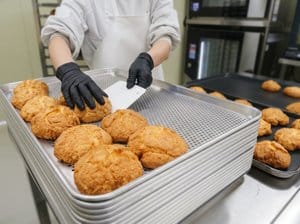
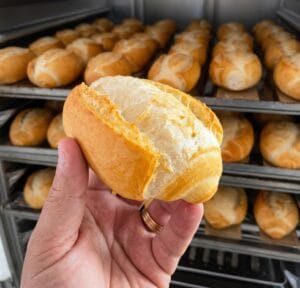
Industrial production line for cinnamon rolls and pastries
Dough & Fermentation Science

The Rise of Sourdough in Sweet Goods: How Industrial Bakers Are Rethinking Clean Label

Sweet pastries face scrutiny regarding synthetic additives and poor nutritional profiles. Integrating specialized sourdough starters bypasses these barriers; it naturally replaces emulsifiers and improves bioavailability. Applying these changes might completely redefine clean label production and gut health integration in sweet goods.

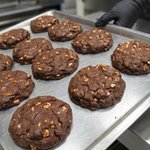
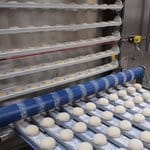
Freshly baked chocolate chip cookies on an industrial conveyor belt
Equipment & Technology

When the Belt Goes Dark: Carbon Buildup in Baking Bands and the Technologies That Fix It

Black spots on cookie bases, rising gas bills, and belts that track badly are all pointing to the same root cause: carbonized sugar locked inside baking bands. Wire brushes cannot reach it; high-pressure water makes it worse. Here is why the problem runs deeper than most plants realize, and which cleaning technologies actually restore efficiency.

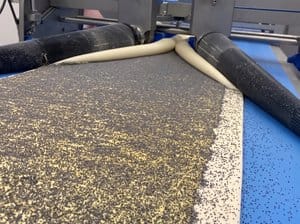
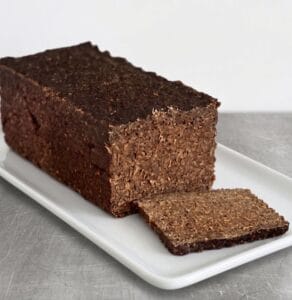
Spelt flour and whole wheat grains with artisanal bread slices
Equipment & Technology

Spelt Dough Processing: Adjustments to Prevent Tearing and Line Failures

The rheological instability of spelt could generate highly sticky doughs that adhere to conveyor belts and collapse, causing high rejection rates, excessive material waste, and continuous line stoppages. This impact could be avoided by integrating stress-free sheeting systems with precisely controlled thermal baking profiles.

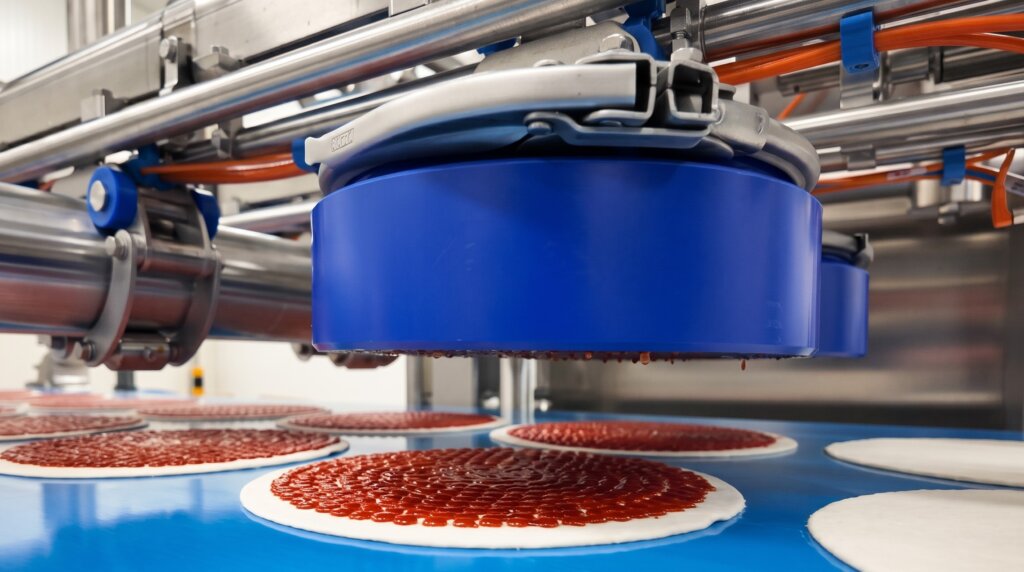
Industrial production line for filling and injecting butter rolls
Knowledge Base

Filling Leaks and Crumb Collapse: Diagnosing and Solving in Butter Rolls

Premature fermentation and fat melting during the mixing stage can cause filling leaks and structural collapses. These defects generate frequent stops and considerable economic losses. Implementing thermal control with ice and precise liquid filling formulation could addresses this specific challenge.

Gluten development and elasticity test in industrial dough mixing
Equipment & Technology

Hydration and Gluten Development: Comparative analysis of mixing technologies

When gluten fails to develop uniformly or temperatures rise uncontrollably, the final product reveals it. The challenge involves ensuring every flour particle receives free water homogeneously without oxidizing the mass or generating friction heat. Many technologies can be chosen according to each baker’s specific production needs.

Hyperspectral moisture distribution map of an industrial bread loaf
Product Quality

Jams and Mold Claims in Industrial Bakeries: What Vision Systems and Hyperspectral Scanning Solve

Morphological misalignments and undetectable internal moisture variations could cause severe jams and early mold growth in industrial bakery operations, compromising profitability by increasing product waste and customer claims. Advanced artificial perception systems could resolve this by continuously correcting robotic handling trajectories and mapping internal chemical anomalies.

About Bakery Industry Insider

Bakery Industry Insider is the technical reference for professionals who run industrial baking operations at scale. Our content is built around one premise: that the decisions made on the production floor (on dough hydration, fermentation timing, enzyme dosing, cooling strategy, equipment configuration, etc) determine whether a plant is profitable or not.

We cover the full industrial baking stack: from raw material science (flour ash content, vital wheat gluten alternatives, redox agents, water absorption, etc) to process engineering (tunnel cooling, vacuum cooling, inline NIR, ultrasonic humidification, etc) and capital equipment (high-hydration mixers, robotic pick-and-place, IoT-driven weight control systems, etc).

Stay current on the science, the machinery, and the business behind large-scale baking.